




Think about the last time you bought something after seeing it on Instagram or YouTube. You are not alone. Millions of people discover brands, read reviews, and make purchase decisions every single day through social media. This is not a trend. This is how modern commerce works.
But here is the real problem: most businesses are on social media without a clear strategy. They post randomly, chase vanity metrics, and wonder why their brand is not growing. If that sounds familiar, this guide is for you.
Let’s break down exactly how social media marketing builds successful brands, step by step.
What Is Social Media Marketing?
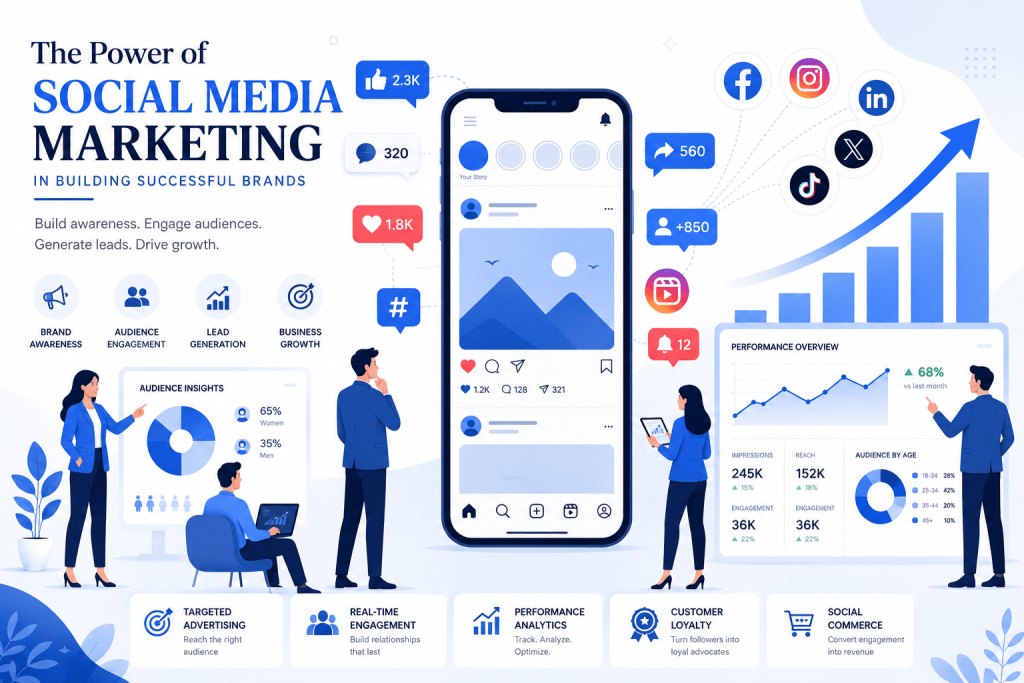
Social media marketing (SMM) is the use of social platforms to promote a brand, connect with audiences, and drive real business results. It covers everything from posting content and running ads to responding to comments and analyzing performance data.
At its core, it is about showing up where your audience already spends time and giving them a reason to care about your brand.
Key components of social media marketing include:
- Content creation (images, videos, carousels, reels, stories)
- Community management and audience engagement
- Paid social advertising campaigns
- Influencer partnerships
- Social listening and brand monitoring
- Performance tracking and analytics
The Role of Social Media in Today’s Digital World
We are living in a social-first internet. As of 2026, over 5.2 billion people use social media worldwide. That number keeps growing. Platforms like Instagram, TikTok, YouTube, LinkedIn, and Facebook are not just entertainment tools. They are discovery engines, customer service channels, and powerful brand-building spaces all at once.
Social platforms now directly influence how people perceive brands. A single viral post can bring thousands of new customers overnight. A negative comment left unanswered can do the opposite. The stakes are real.

Organic vs. Paid Social Media Marketing
Understanding this difference is important before building any strategy.
Organic social media means content you post for free. It builds your audience over time through consistent value.
Paid social media means running ads to reach people beyond your current followers. It delivers faster results but requires a budget.
Most successful brands use both. Organic builds trust. Paid accelerates growth.
Why Social Media Marketing Matters for Brands
1. Increases Brand Awareness and Visibility
When people see your brand repeatedly across platforms, they remember it. Consistent posting, shares, and engagement keep your business visible without you needing to spend on traditional ads every day.
2. Builds Trust and Credibility
Real customer reviews, behind-the-scenes content, and honest conversations on social media make your brand feel human. People trust brands they can see, talk to, and relate to.
3. Enhances Customer Engagement
Social media gives you a direct line to your customers. You can ask questions, run polls, reply to comments, and build real relationships. That level of interaction is impossible through a billboard or a TV ad.
4. Drives Website Traffic and Lead Generation
Every post, story, or video is an opportunity to send people to your website. With the right call to action, social media becomes one of your strongest traffic sources.
5. Supports Long-Term Business Growth
Brands that invest in social media early build an audience that compounds over time. That audience becomes loyal customers, free word-of-mouth marketers, and long-term revenue.
Key Benefits of Social Media Marketing
Cost-Effective Strategy
Starting with organic social media costs nothing but time. Even paid campaigns on platforms like Meta and TikTok can be started with small budgets. Compared to TV, print, or outdoor advertising, the return per dollar is far better for most businesses.
Real-Time Communication
You can talk to customers the moment they have a question or concern. This speed builds confidence and sets your brand apart from slower competitors.
Better Audience Targeting
Social platforms collect detailed user data. This allows you to target ads by age, location, interests, behavior, job title, and much more. You spend money reaching exactly the right people.
Improved Customer Loyalty and Retention
When customers follow you on social media, they stay connected to your brand even between purchases. Regular content keeps your business top of mind and brings people back.
Valuable Customer Insights
Platform analytics show you what content performs, who your audience is, when they are most active, and what they care about. This data removes guesswork from your marketing decisions.
How Social Media Helps Build a Strong Brand
Creating a Consistent Brand Identity
Your profile photo, tone of voice, color scheme, and content style should look and feel the same across every platform. Consistency signals professionalism and makes your brand instantly recognizable.
Sharing Valuable and Engaging Content
The brands that grow on social media are not just selling. They are teaching, entertaining, inspiring, and solving real problems. Educational posts, how-to videos, and helpful tips bring people back again and again.
Humanizing the Brand Through Storytelling
People do not connect with logos. They connect with stories. Share the people behind your brand, the challenges you have overcome, customer success stories, and real moments from your journey. This kind of content builds genuine emotional connection.
Building an Online Community
Great brands turn followers into communities. They create spaces where people feel like they belong. Facebook Groups, Discord servers, Instagram Close Friends, and branded hashtags are all tools for building this sense of belonging.
Managing Brand Reputation
Social media is also where brand crises happen. Responding to negative feedback quickly and professionally, correcting misinformation, and taking accountability when things go wrong all protect and strengthen your brand image.
Essential Social Media Marketing Strategies
Step 1: Define Your Goals and Target Audience
Start by asking: What do you want social media to do for your business? Generate leads? Drive sales? Build awareness? Then define exactly who you are talking to. Age, interests, income level, problems they face, and where they spend time online.
Step 2: Choose the Right Platforms
You do not need to be everywhere. Focus on where your audience actually is.
- B2C brands with visual products: Instagram, TikTok, Pinterest
- B2B brands and professionals: LinkedIn
- Broad consumer reach: Facebook, YouTube
- Gen Z and younger audiences: TikTok, Snapchat
Step 3: Create a Content Calendar
Plan your content in advance. A content calendar keeps posting consistent and gives you time to create quality work rather than scrambling last minute.
Step 4: Leverage Video and Visual Content
Video is the highest-performing content format across nearly every platform in 2026. Short-form videos (Reels, TikToks, YouTube Shorts) get more reach than any other format. Prioritize them.
Step 5: Use Influencer Marketing
Partnering with creators who already have your audience’s trust is one of the fastest ways to grow. Micro-influencers (10,000 to 100,000 followers) often deliver better engagement rates than mega celebrities at a fraction of the cost.
Step 6: Run Paid Advertising Campaigns
Boost your best organic content, run targeted lead generation ads, and retarget website visitors. Paid social speeds up results and fills the gaps that organic reach cannot cover.
Common Social Media Marketing Mistakes to Avoid
- Posting without a strategy – Random content with no clear goal wastes time and confuses your audience.
- Ignoring comments and messages – Silence is the fastest way to damage trust. Reply to your audience.
- Promoting too much, adding too little value – The 80/20 rule works: 80% value-based content, 20% promotion.
- Not tracking your metrics – If you are not measuring results, you cannot improve them.
- Copying the same content to every platform – Each platform has its own format, audience, and culture. Customize your content accordingly.
Measuring Social Media Marketing Success
Good marketers track what actually matters. Here are the key metrics to watch:
- Reach and Impressions: How many people are seeing your content?
- Engagement Rate: Are people liking, sharing, saving, and commenting?
- Follower Growth: Is your audience expanding over time?
- Website Traffic: Is social driving people to your site?
- Lead Generation and Conversions: Are those visitors turning into customers?
- Return on Investment (ROI): Is what you are spending on social media paying off in revenue?
Use platform-native analytics tools combined with Google Analytics to get the full picture.
Future Trends in Social Media Marketing
AI-Powered Content Creation
AI tools are now helping marketers write captions, generate video scripts, design visuals, and even post automatically. In 2026, the brands winning on social are using AI to work faster without losing their human voice.
Short-Form Video Dominance
TikTok changed everything. Short videos under 60 seconds now dominate organic reach on Instagram, YouTube, and LinkedIn too. This format is not slowing down.
Social Commerce Growth
You can now browse, click, and buy without ever leaving a social app. Instagram Shops, TikTok Shop, and Pinterest Shopping are turning social feeds into storefronts. Brands that have not set up social commerce are leaving real money on the table.
Personalized Customer Experiences
Algorithms are getting better at serving content that matches individual interests. Brands that create content for specific audience segments rather than a general crowd will see dramatically better results.
Community-Driven Marketing
Brand communities are becoming more valuable than follower counts. The brands building private groups, memberships, and loyal tribes are creating something that algorithms cannot take away.
Conclusion
Social media marketing is no longer optional for brands that want to grow. It is the most direct, affordable, and powerful way to build awareness, earn trust, connect with customers, and drive sales in the modern digital world.
The brands winning today are not the ones with the biggest budgets. They are the ones that show up consistently, provide real value, listen to their audience, and adapt to what works.
Key takeaways to remember:
- Start with a clear strategy before posting anything
- Choose platforms based on where your audience lives
- Create content that educates, entertains, or solves problems
- Engage with your audience every single day
- Track performance and keep improving
Social media is a long game. But the brands that commit to it early and stay consistent are the ones that become household names. Start building yours today.