

Micro & Nano-Influencer Marketing Strategies That Deliver Real ROI in 2025
Introduction: The New Era of Influencer Marketing
The creator economy has completely transformed how brands connect with customers. Gone are the days when only celebrities with millions of followers could move the needle for businesses. Today, micro influencers and nano influencers are delivering results that mega influencers simply cannot match.
What is influencer marketing in 2025? It’s about real conversations, not just broadcasting messages. Micro influencers typically have 10,000 to 100,000 followers, while nano influencers work with even smaller audiences of 1,000 to 10,000 people. These content creators have built tight communities where every post sparks genuine interaction.
This shift represents more than just a trend. Brands are seeing authentic marketing deliver better engagement, higher conversion rates, and stronger influencer marketing ROI than traditional celebrity partnerships ever could. The numbers back this up: smaller creators often achieve engagement rates 3 to 5 times higher than their macro counterparts.
Why Micro Influencers and Nano Influencers Are Dominating in 2025
The Shift from Reach to Authenticity in Influencer Marketing
The digital marketing landscape has changed dramatically. Consumers scroll past polished, perfect advertisements without a second thought. What stops them? Real people sharing honest experiences.
Micro influencer trends show that audiences crave connection over perfection. When someone with 15,000 followers recommends a product, their audience knows it’s probably because they genuinely love it. This influencer trust factor cannot be manufactured or bought.
High Engagement Influencers Deliver Better Results
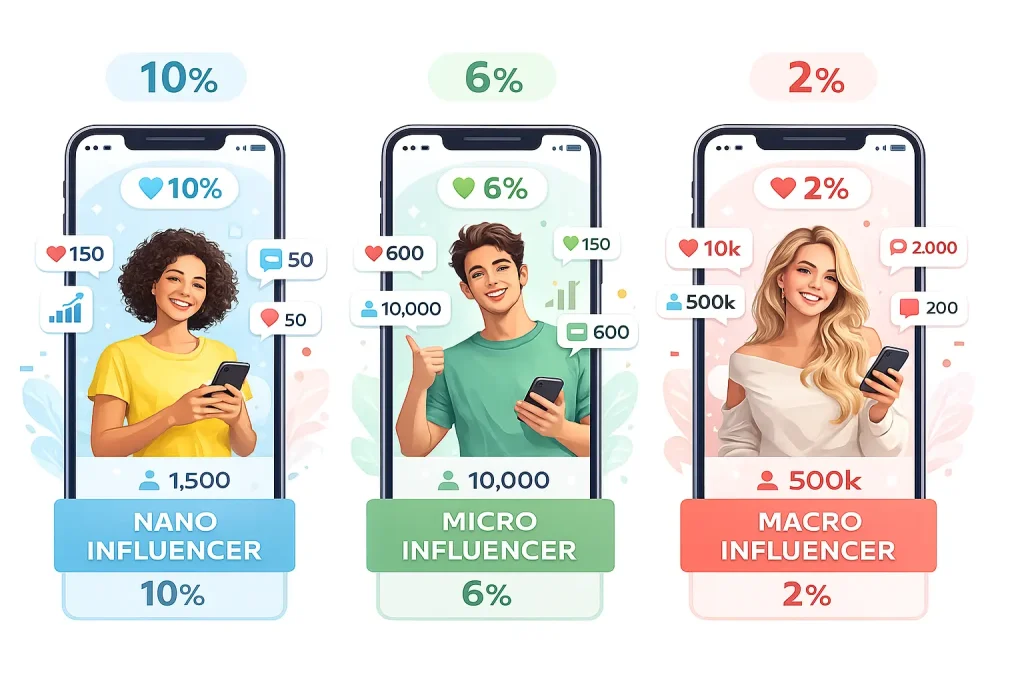
Let’s talk numbers. Nano influencer engagement rates regularly hit 8% to 10%, while mega influencers often struggle to reach 2%. Why?
Smaller creators bond better with their followers because they:
- Reply to most comments personally
- Share behind-the-scenes moments from daily life
- Build relationships rather than just posting content
- Stay accessible and relatable
Consumer Behavior 2025 Demands Authentic Marketing
People trust recommendations from real people far more than celebrity endorsements. A study found that 92% of consumers trust suggestions from individuals over branded content. This social proof marketing drives actual purchasing decisions.
Ad fatigue has reached an all-time high. Traditional advertising feels intrusive and disconnected. Micro vs macro influencers stats prove that smaller creators cut through this noise because their content feels like advice from a friend.
Benefits for Brands Working with Small Creators
Higher Customer Engagement
Nano influencers 2025 are crushing it with engagement metrics that brands dream about. When comparing results:
- Nano influencers: 8% to 10% engagement
- Micro influencers: 4% to 6% engagement
- Macro influencers: 1.5% to 2.5% engagement
These smaller accounts create genuine conversations in their comment sections. Followers ask questions, share their own experiences, and tag friends who might benefit from the content.
Cost-Effective Marketing with Better Returns
Budget matters for most businesses. Low budget influencer marketing becomes possible when working with micro and nano creators. Instead of spending $50,000 on one celebrity post, brands can partner with 50 smaller influencers for the same investment.
How to calculate influencer ROI becomes straightforward: track the actual conversions, engagement, and sales generated per dollar spent. Smaller creators consistently deliver better returns because their audiences take action.
Niche Marketing Strategy for Targeted Reach
Micro influencer benefits shine brightest in specialized markets. Need to reach vegan marathon runners? Sustainable fashion enthusiasts? Tech-savvy parents? Small creators dominate these niche marketing spaces.
Influencer marketing for small business works because you can find creators whose audiences perfectly match your customer profile. This targeted audience reach means every dollar spent connects with potential buyers.
Increased Conversion Marketing Through Personal Recommendations
When followers trust a creator, they act on recommendations. User generated content (UGC) from these partnerships feels authentic because it is. These posts don’t look like ads, they look like genuine product discoveries.
The personalized touch matters. A nano influencer might explain exactly how they use your product in their morning routine, creating a story that resonates and drives purchases.
Micro vs Nano Influencers: Understanding the Difference Between Micro and Nano Influencers
Follower Count and Influencer Categories
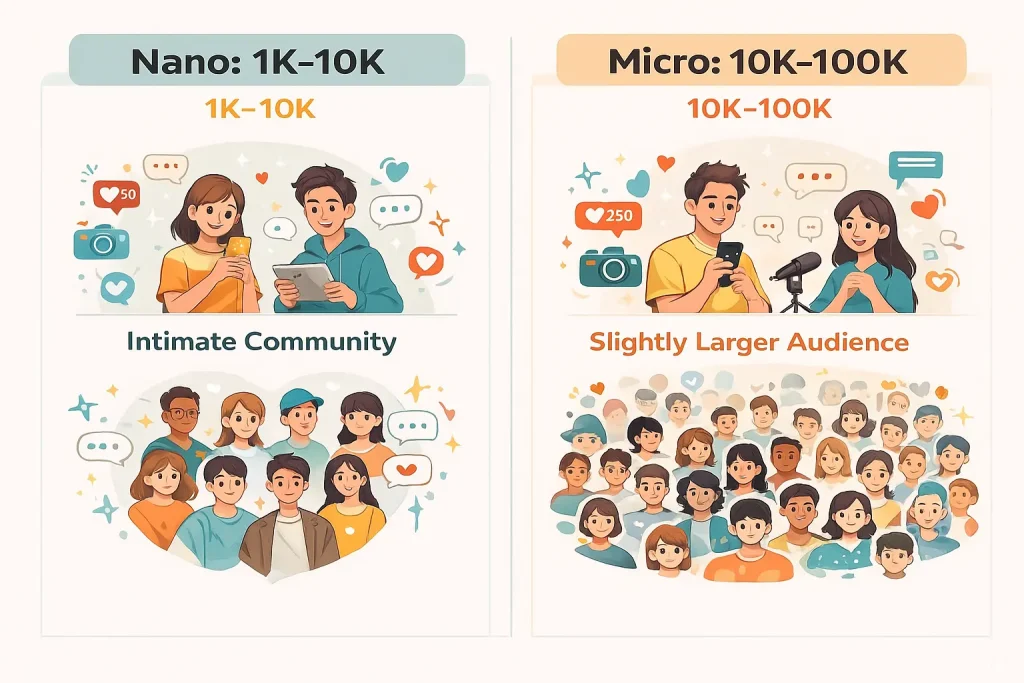
Nano influencer follower range: 1,000 to 10,000 followers Micro influencer range: 10,000 to 100,000 followers
Both fall into the creator tier marketing sweet spot where engagement remains high and audiences stay connected.
Influencer Comparison: Engagement and Trust Levels
Nano influencers win on intimacy. They often know their followers personally and maintain tight-knit communities. Their recommendations carry weight because followers see them as peers.
Micro influencers balance reach with relationship. They’ve grown large enough to impact sales numbers while maintaining strong connections. Their content often appears more polished and professional.
Choosing the Right Influencer Size for Your Brand Goals
Which type works best? It depends on your objectives:
Choose nano influencers when:
- Testing new products in specific markets
- Building grassroots buzz
- Working with very limited budgets
- Targeting hyperlocal audiences
Choose micro influencers when:
- Scaling campaigns after successful tests
- Needing more professional content quality
- Targeting broader but still specific niches
- Requiring consistent content volume
How to Find Influencers Who Match Your Brand
Key Criteria for Influencer Selection
Vetting influencers for authenticity requires looking beyond follower counts. Focus on:
Engagement rate: Comments and shares matter more than likes. Look for active conversations in their posts.
Content authenticity: Does their feed feel genuine? Do they only post sponsored content, or do they share personal moments too?
Audience demographics: Use influencer analytics tools to verify their followers match your target customers.
Brand alignment: Their values and content style should naturally fit with your company message.
Best Tools to Find Micro Influencers
Influencer discovery platforms simplify the search process dramatically. Top options include:
Modash: Powerful search filters for finding creators by niche, location, and engagement metrics. Excellent for influencer research methods.
Aspire: Great for managing relationships and tracking campaign performance. Strong brand influencer matching features.
Upfluence: Comprehensive database with detailed analytics. Perfect for influencer demographics research.
HypeAuditor: Best for fake followers check and influencer fraud detection. Ensures you work with legitimate accounts.
Free influencer search engines exist too. Instagram and TikTok’s native search tools work well when you know your niche keywords.
Influencer Marketing Strategy: Running Successful Influencer Campaigns
Setting Clear Campaign Goals
Define what success looks like before reaching out. Common objectives:
- Driving direct sales through affiliate links
- Building brand awareness strategy
- Generating user generated content (UGC) for your channels
- Collecting authentic product reviews
Influencer Outreach Guide: Approaching Creators Professionally
How to write an influencer brief matters enormously. Successful outreach includes:
- Personalized messages showing you actually follow their content
- Clear explanation of the partnership opportunity
- Flexibility in content creation (let creators maintain their voice)
- Transparent discussion about compensation
Negotiating with influencers works best when you respect their creative process. They know their audience better than anyone.
Creating Fair Paid Influencer Partnerships
Influencer contract best practices protect both parties. Essential elements:
- Deliverables clearly spelled out (number of posts, stories, videos)
- Usage rights for content
- Payment terms and timeline
- Disclosure requirements for sponsored content
Influencer relationship management tips: Treat creators as partners, not vendors. The best campaigns emerge from collaborative relationships.
Do’s and Don’ts of Content Collaboration
Do:
- Give creative freedom within brand guidelines
- Respond quickly to questions
- Share campaign results with creators
- Build ongoing relationships
Don’t:
- Micromanage every detail (micromanaging creators kills authenticity)
- Demand numerous revisions
- Ignore performance data
- Focus only on follower counts
AI in Influencer Marketing: How Technology Elevates Results

AI Marketing Tools 2025 Transform Discovery
Using AI to find influencers saves countless hours. AI influencer analytics scan millions of accounts to identify perfect matches for your brand. These tools analyze engagement patterns, audience demographics, and content themes instantly.
Automated influencer marketing platforms handle tedious tasks like tracking posts, calculating reach, and measuring engagement across multiple campaigns simultaneously.
AI Campaign Automation and Performance Prediction
AI tools for creator management predict which partnerships will succeed before you invest. Machine learning algorithms analyze historical campaign data to forecast results.
AI audience insights reveal deeper patterns about follower behavior, optimal posting times, and content formats that drive conversions. This marketing automation AI helps brands make smarter decisions faster.
The Future of AI in Digital Marketing
AI content optimization tools suggest improvements to creator briefs and campaign messaging. They identify trending topics and formats within specific niches, keeping your strategy current.
These technologies don’t replace human creativity. They amplify it by handling data analysis and pattern recognition, freeing marketers to focus on strategy and relationships.
Influencer Marketing Case Studies: Real Results from Successful Influencer Campaigns
Micro Influencer Campaign Examples: Gymshark’s Community Building
Gymshark built a fitness empire largely through micro influencers. Instead of hiring major athletes, they partnered with everyday fitness enthusiasts documenting their journeys.
Results:
- Generated thousands of pieces of authentic user generated content (UGC)
- Built a loyal community that actively promotes the brand
- Achieved exponential growth with modest marketing budgets
- Created brand ambassadors who genuinely love the products
Nano Influencer Success Stories: Daniel Wellington’s Strategy
Daniel Wellington watches became a global sensation through nano influencers. They gifted watches to thousands of small creators in exchange for posts.
Real world influencer marketing results:
- Scaled from unknown to $220 million in revenue
- Generated massive social media conversions through authentic posts
- Built brand recognition without traditional advertising
- Proved that volume of small partnerships beats few large ones
These marketing success stories demonstrate that influencer marketing ROI comes from authentic connections, not just massive reach.
Influencer Marketing Mistakes to Avoid
Choosing Influencers Only by Follower Count
Influencer follower count tells you nothing about actual influence. A creator with 8,000 engaged followers delivers better results than one with 100,000 inactive accounts.
Ignoring Fake Followers and Influencer Fraud Detection
How to spot fake influencers:
- Sudden follower spikes without corresponding engagement
- Comments that feel generic or bot-generated
- Engagement rate below 1% to 2%
- Followers from countries unrelated to their content
Use influencer analytics tools to verify authenticity before signing contracts.
Not Tracking Proper Metrics
Common influencer campaign errors include measuring vanity metrics instead of business results. Track:
- Actual conversions and sales
- Traffic driven to your website
- Quality of user generated content created
- Long-term brand sentiment changes
Why Influencer Campaigns Fail: Micromanaging Creative Process
Influencer marketing pitfalls often stem from brands demanding overly scripted content. Followers spot inauthentic posts immediately. Trust creators to communicate your message in their voice.
Future of Influencer Marketing: What’s Next for the Creator Economy
Social Media Predictions 2025 Point to Continued Growth
Is influencer marketing growing? Absolutely. The creator economy future looks stronger than ever. Platforms keep rolling out tools specifically for creators, and brands continue shifting budgets away from traditional advertising.
